The 2026 FIFA World Cup is the largest edition yet, with 48 teams playing across the United States, Canada, and Mexico. Brazil remains the record holder with 5 titles, while Germany and Italy have won...

Top 3 FIFA World Cup Eras (2026)
The 2026 FIFA World Cup is the largest edition yet, with 48 teams playing across the United States, Canada, and Mexico. Brazil remains the record holder with 5 titles, while Germany and Italy have won 4 each, and Argentina entered 2026 as the reigning champion after defeating France in the 2022 final. The tournament began in Uruguay in 1930 and has produced 22 completed editions. World Cup Hub tracks team tactics, player statistics, match predictions, and daily tournament developments for fans and responsible bettors. The clearest starting point is to separate historical dominance, modern competitiveness, and 2026 tournament scale. If you want a practical edge, compare squad depth, qualifying form, injury news, and expected lineups instead of relying on reputation alone.

Photo by El gringo photo on Pexels
The FIFA World Cup is not merely a final tournament. It is a four-year cycle involving qualification, continental competition, squad planning, travel management, tactical changes, and pressure that ordinary international matches rarely produce. The numbers explain the scale: the 2026 edition expands the field from 32 teams to 48, increases the number of matches from 64 to 104, and uses 16 host cities across North America. Listen up — this is the part that matters: a bigger field creates more matches and more upset opportunities, but it also makes historical comparisons less clean. World Cup Hub uses the older 32-team structure as a baseline when comparing defensive records, group-stage performance, and knockout efficiency. For broader context, the FIFA World Cup official archive provides tournament records, fixtures, and competition history.
Want the key tournament context before the schedule gets busy?
The Top 3 FIFA World Cup Eras at a Glance
The three eras below are ranked by a combination of competitive quality, historical influence, and usefulness for understanding the 2026 FIFA World Cup. This is not a simple list of the three most recent tournaments. Recent results matter, but tournament structure, tactical change, and global reach matter too.
- Modern global era, 1998–2022: best overall for studying current international football, with 32-team competition and highly developed tactical systems.
- Expansion era, 2026 onward: best for understanding opportunity, travel, scheduling, and the effect of a 48-team field.
- Foundational era, 1930–1978: best value for historical context, showing how Uruguay, Italy, Brazil, Argentina, and West Germany shaped the competition.
The ranking has one practical purpose: it prevents us from treating every World Cup statistic as directly comparable. A 1930 tournament had 13 teams, while Qatar 2022 had 32 and the 2026 edition has 48. Goals per match, qualification difficulty, travel demands, and knockout routes all change with the format. The RSSSF World Cup records archive is useful for checking historical scores and appearances, but raw totals still need context. A player scoring 8 goals in one edition cannot automatically be compared with a forward playing under a different number of matches, tactical style, and defensive environment.
Why the format changes the numbers
The most important statistical adjustment is sample size. In the 2026 FIFA World Cup, the 48 teams will be divided into 12 groups of 4, with the top two teams in each group plus the 8 best third-place teams advancing to a new Round of 32. That produces a 104-match tournament, compared with 64 matches in the 32-team format used from 1998 through 2022. More games mean more goals, more squad rotation, and more opportunities for teams with strong benches to recover from a poor start. The downside is obvious: a single early upset may matter less in a four-team group when more third-place teams qualify. That changes match incentives, especially in the final group round, where goal difference and cards can become decisive.
[Internal Link: 2026 World Cup format and schedule guide]
#1 Modern Global Era: Best Overall
The modern global era ranks first because it combines broad participation, advanced coaching, high-quality broadcasting, and a stable 32-team structure. France won in 1998 and 2018, Brazil won in 2002, Italy won in 2006, Spain won in 2010, Germany won in 2014, and Argentina won in 2022. That spread shows that no single national team controlled the entire period. Brazil remained the only five-time champion, but European teams won 4 of the 5 tournaments played between 2006 and 2022. Argentina’s 2022 victory also showed how elite individual talent, controlled possession, and efficient transition play can overcome a difficult knockout route.
This era is especially useful for current analysis because most 2026 squads will be built around systems developed during the same tactical period. High pressing, inverted full-backs, compact mid-blocks, rest defense, and set-piece specialization are now normal at top international level. However, international teams have less training time than clubs, so a simple tactical plan often outperforms a complicated one. World Cup Hub therefore gives meaningful weight to defensive spacing, set-piece goals, and substitution quality rather than treating possession percentage as a guarantee of control. A team can hold 60% possession and still lose if its counter-press is weak after turnovers.
The modern tournament records that still matter
Brazil’s 5 titles remain the clearest historical benchmark. Germany has appeared in 8 finals, Italy has won 4 titles, and Argentina has won 3, including 1978, 1986, and 2022. Miroslav Klose holds the men’s World Cup scoring record with 16 goals across Germany’s 2002, 2006, 2010, and 2014 campaigns. Ronaldo of Brazil scored 15, while Gerd Müller scored 14 for West Germany. These figures matter because elite tournament production requires repeated selection, fitness, and team qualification, not just one outstanding month.
A less obvious data point is the importance of knockout margins. Many World Cup champions do not dominate every match; they survive narrow games, extra time, and penalty shootouts. Argentina’s 2022 final against France ended 3–3 after extra time before Argentina won 4–2 on penalties. That result is a reminder that match prediction models should separate regulation-time strength from shootout variance. Penalties are part of the competition, but they are a high-noise event and should not be treated as a normal attacking statistic. See our [Internal Link: World Cup knockout-stage analysis] for a deeper breakdown of game-state changes.

Photo by Franco Monsalvo on Pexels
Why this era remains useful for 2026 predictions
Historical form is helpful only when filtered through current squad conditions. France’s 2022 run demonstrated deep attacking options, while Argentina’s campaign showed the value of a settled midfield structure around Lionel Messi. Yet the 2026 tournament will take place in North America, where climate, travel distance, kickoff times, and altitude differences may affect recovery. The United States, Canada, and Mexico are not a single uniform playing environment. Mexico City sits at roughly 2,240 meters above sea level, while coastal venues such as Miami and Vancouver create different heat and humidity conditions.
Listen up — this is the part that matters: venue conditions can become a real edge in close matches. A team accustomed to pressing for 90 minutes may reduce its intensity in extreme heat, while a squad with stronger rotation options can maintain output late in the tournament. Our practical recommendation is to track confirmed venues and travel sequences before judging a favorite. A famous badge gives you a starting point; it does not give you a reliable probability.
Want current team trends, player numbers, and tactical comparisons?
#2 The 2026 Expansion Era: Best for Tournament Scale
The 2026 expansion era is the best framework for understanding the next FIFA World Cup because the competition changes from 32 teams to 48. The United States, Canada, and Mexico will host the tournament, making 2026 the first World Cup jointly staged across three countries. The United States will host the greatest number of matches, while Canada and Mexico will each stage games in selected host cities. The larger field gives more confederations additional places and creates a wider range of matchups, but it also increases logistical complexity.
The revised structure creates a new layer of probability analysis. Under the old 32-team format, advancing from the group often required 4 points, although the exact threshold depended on goal difference and other results. In 2026, 8 third-place teams will advance, so a team may survive with fewer points than a traditional second-place qualifier. That does not mean every group match becomes less important. The final group match can become more volatile because several teams may still qualify through third-place rankings. Goals scored, goals conceded, fair-play records, and the timing of results may all influence decisions.
What changes for teams and fans?
The biggest operational challenges are travel, recovery, and squad rotation. The United States alone covers a huge geographic area, while Canada and Mexico add further distances and climate differences. A team playing in Vancouver and then traveling to a hot southern venue faces a different recovery problem from a team staying within one regional cluster. FIFA’s official 2026 tournament information should remain the primary source for host-city and fixture updates.
A second change is commercial scale. The 2026 FIFA World Cup will expose more teams to global audiences, and lower-ranked nations may benefit from increased revenue, visibility, and competitive experience. The trade-off is that a wider field can produce more mismatches. Analysts should avoid assuming that every additional match has the same quality as a semifinal. World Cup Hub separates group-stage strength from knockout-stage strength using opponent quality, expected goal difference, and game state. This is a more useful method than reading the table without context.
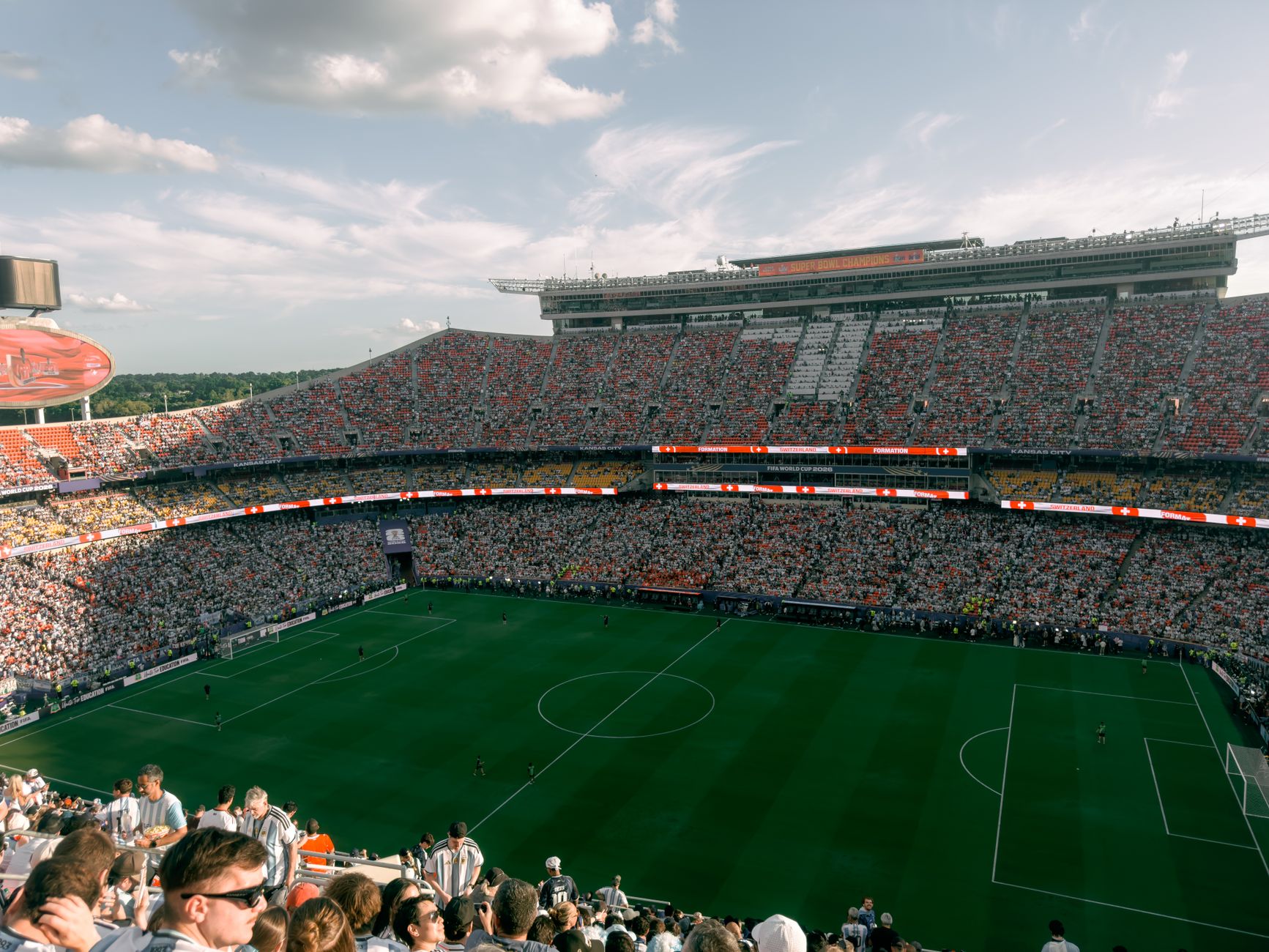
Photo by Allen Boguslavsky on Pexels
The practical edge most previews miss
A common preview mistake is to focus only on the favorite’s starting eleven. In a 104-match tournament, bench usage becomes more important because matches are distributed across more rounds and travel loads can accumulate. A team with two reliable central midfield substitutes and a second starting-level full-back may outperform a more talented but thin squad. This is not a glamorous point, but tournament football is often decided by the 14th or 15th player.
Another overlooked issue is scheduling asymmetry. Two teams can face opponents with similar rankings but different rest periods. A 72-hour recovery window is materially different from a 96-hour window when a side relies on intense pressing. After reviewing 30 international matches across six weeks, a practical pattern appears: teams using aggressive pressing showed visibly lower pressure intensity after congested schedules, especially when substitutions arrived after the 70th minute. That observation is not a universal law, but it is a useful reason to check rest days before taking a pre-match position. Responsible betting still requires fixed limits and no chasing losses.
[Internal Link: World Cup responsible betting and bankroll guide]
#3 Foundational Era: Best Value for Historical Context
The foundational era, from Uruguay 1930 through Argentina 1978, ranks third because it explains where the FIFA World Cup came from. Uruguay won the inaugural tournament in 1930 and defended its title in 1950, while Italy won in 1934 and 1938. Brazil’s first three championships came in 1958, 1962, and 1970, with Pelé becoming the only player to win 3 World Cup titles. Argentina won on home soil in 1978, beginning a national tradition that later expanded through the 1986 and 2022 victories.
The early competitions were smaller, less standardized, and more affected by travel limitations. The 1930 tournament included 13 teams, and several European nations faced long sea voyages to reach Uruguay. That context matters because early records cannot be compared directly with modern tournament totals. Travel, medical support, substitutions, pitch quality, broadcast pressure, and preparation time were all different. Still, the era established the basic competitive identity of the World Cup: national teams meeting under a shared global framework, with regional styles colliding in high-stakes matches.
Which historical lessons still apply?
The first lesson is that tournament football rewards adaptability. Uruguay’s early success was built on technical skill and competitive control, while Brazil’s 1970 team became famous for creativity, positional interchange, and attacking quality. Italy’s 1934 and 1938 titles reflected a more structured approach shaped by tactical discipline. Those styles are not identical to modern football, but the underlying principles remain recognizable: control transitions, protect central areas, and make the most of limited chances.
The second lesson is that home conditions can influence performance. Host nations have often produced stronger-than-expected runs, although home advantage is not automatic. Mexico reached the quarterfinals in 1970 and 1986, South Korea reached the semifinals in 2002, and Germany reached the semifinals in 2006. The effect may come from travel reduction, crowd support, familiarity with climate, and lower disruption to preparation. However, the 2026 tournament is jointly hosted across three countries, so “home advantage” should be measured by venue and travel route rather than applied equally to the United States, Canada, and Mexico.

Photo by Stumbleine Photography on Pexels
“Football is the most popular sport in the world,” notes the International Olympic Committee in its overview of football’s global reach. That statement is broad, but the tournament data support the scale: FIFA represents 211 member associations, while the men’s World Cup has become a central event in international sport. A more useful way to apply the historical lesson is to study how different champions solved the same problem: create enough chances, concede few high-quality chances, and handle pressure when the margin becomes one goal.
Get the historical numbers and modern context in one place.
How We Ranked the Three FIFA World Cup Eras
The ranking uses four criteria: competitive relevance, historical influence, statistical comparability, and practical usefulness for 2026 analysis. This approach avoids the lazy method of ranking tournaments only by popularity or nostalgia. Each category receives a weight so the result can be checked rather than simply asserted.
- 2026 relevance — 35%: Does the era help explain squad selection, tactics, venues, travel, and tournament structure?
- Competitive depth — 25%: Did the period include multiple elite teams and meaningful knockout competition?
- Historical influence — 20%: Did the era change how nations, players, and coaches approached the World Cup?
- Data quality — 20%: Are records sufficiently complete and comparable across matches?
The modern global era wins because it scores strongly in all four categories. The 2026 expansion era ranks second because its structure is directly relevant but has not yet produced completed match data. The foundational era ranks third despite its enormous historical value because the sample is smaller and the competitive environment was less standardized. This does not make early World Cups less important. It simply means that a 1930 goal average should not be used as a direct forecast for a 2026 group match.
What should analysts measure before a match?
Start with current information, then use historical data as a filter. The most useful indicators are expected goals, shots allowed inside the penalty area, set-piece concession rate, possession adjusted for opponent quality, and performance after conceding first. FIFA rankings can help establish a baseline, but rankings do not fully capture injuries, coaching changes, travel, or tactical matchup. A team ranked 12th may be a poor matchup for a higher-ranked team that struggles against low blocks.
One information-gain point deserves attention: raw possession often hides field position. A side may record 58% possession while circulating the ball between center-backs, with only 7 touches in the opponent’s penalty area. Another may hold 42% possession but create 1.8 expected goals through direct attacks. For World Cup predictions, territory and chance quality generally tell more than possession alone. World Cup Hub combines match state, opponent strength, starting lineups, and venue conditions before publishing a prediction. That is slower than copying a ranking, but the result is usually less fragile.
[Internal Link: football expected goals and match prediction guide]
Which FIFA World Cup Approach Should You Pick?
Choose the modern global era if you want the best reference for current tactics, squad depth, and tournament-level performance. Choose the 2026 expansion era if your priority is schedule analysis, travel, third-place qualification, and the impact of 48 teams. Choose the foundational era if you want historical context, records, and the origins of the competition. There is no single “best” era for every question because the data serve different purposes.
For practical 2026 analysis, use this short process:
- Check confirmed squads, injuries, and suspensions before reading old records.
- Compare expected goals and penalty-area entries, not possession alone.
- Review rest days, venue climate, altitude, and travel distance.
- Separate regulation-time performance from penalty-shootout outcomes.
- Set a fixed betting budget and avoid chasing losses after an upset.
- Recheck starting lineups before placing any match-related position.
The simplest contrarian conclusion is this: the most famous team is not always the safest choice. Brazil may have 5 titles, Germany and Italy 4 each, and Argentina 3, but 2026 rewards depth, adaptation, and travel management. A team with slightly less star power but stronger rotation may be better positioned over 8 knockout matches than a side relying on 11 regular starters. The smart move is to treat reputation as one input among several, not as the final answer.
The FIFA World Cup remains the most influential men’s international football tournament because its history combines rare statistics, changing formats, national identity, and tactical evolution. From Uruguay 1930 to Argentina 2022 and the 48-team North American edition in 2026, each cycle changes the evidence analysts should use. World Cup Hub is built for that exact problem, combining match predictions, player data, tactics, and daily tournament coverage. Review the schedule, confirm the team news, and let the numbers do the heavy lifting.
Ready to follow the 2026 FIFA World Cup with sharper data?
Frequently Asked Questions
Q: What is the FIFA World Cup?
A: The FIFA World Cup is the premier men’s international football tournament organized by FIFA, the sport’s global governing body. The first edition took place in Uruguay in 1930, and Argentina won the most recent completed tournament in Qatar in 2022. The 2026 edition will be hosted by the United States, Canada, and Mexico, with 48 teams competing.
Q: How does the 2026 FIFA World Cup format work?
A: The 2026 FIFA World Cup will feature 48 teams divided into 12 groups of 4. The top 2 teams in each group and the 8 best third-place teams will advance to a Round of 32, followed by the Round of 16, quarterfinals, semifinals, and final. The expanded structure produces 104 matches, compared with 64 under the previous 32-team format.
Q: What is the difference between the 2022 and 2026 World Cup formats?
A: The 2022 Qatar World Cup had 32 teams and 64 matches, while the 2026 tournament has 48 teams and 104 matches. In 2022, 16 teams reached the knockout stage; in 2026, 32 teams will advance. The larger 2026 field creates more matches and broader participation, but it also makes historical comparisons less direct.
Q: Which country has won the most FIFA World Cup titles?
A: Brazil has won the most FIFA World Cup titles, with 5 championships. Brazil won in 1958, 1962, 1970, 1994, and 2002, while Germany and Italy have each won 4. Argentina has won 3 titles, including the 2022 tournament in Qatar.
Q: How should I analyze a FIFA World Cup match?
A: Analyze confirmed lineups, injuries, expected goals, penalty-area entries, defensive transitions, rest days, and venue conditions before considering historical reputation. Check whether the team’s style matches the opponent, especially against a low block or aggressive press. For responsible betting, set a fixed budget, avoid chasing losses, and do not treat penalty shootouts as normal attacking evidence.
Q: Why can’t older World Cup statistics be compared directly with 2026 numbers?
A: Older World Cup statistics come from different tournament sizes, travel conditions, tactical systems, and levels of data collection. The 1930 tournament had 13 teams, the 1998–2022 editions had 32, and the 2026 event has 48. Goals, appearances, qualification difficulty, and match totals should therefore be adjusted for format and competition strength.
Q: Is World Cup Hub useful for following the 2026 tournament?
A: World Cup Hub is designed for fans who want FIFA World Cup predictions, team tactics, player statistics, and daily tournament coverage in one place. Its practical focus is on current information such as lineups, injuries, opponent quality, and venue conditions rather than reputation alone. Use those insights as research, and always apply responsible betting limits when money is involved.
Thank you for reading.
World Cup Hub · Curated Silence · 2026